Posts

Showing posts with the label Universal Design for Learning

UDL in the Classroom - A Tip Sheet for Educators

Image
By: Ryan Keefe , EC-SEAT Scholar What is UDL? Universal Design for Learning (UDL) is a framework that provides ALL students equal opportunities to learn. UDL encourages teachers to design flexible curricula that meet the diverse needs of all learners. Using UDL principles in general education classrooms makes curriculum and instruction accessible and engaging.  Curriculum barriers are reduced; Learning is supported; Students gain knowledge, skills, and enthusiasm for learning; and  Students learning is validly assessed.  Visit http://udlguidelines.cast.org/ to learn more! Benefits to UDL Students come to the classroom with a variety of needs, skills, talents, interests and experiences. For many learners, typical curricula are littered with barriers and roadblocks, while offering little support. UDL encourages the design of flexible, supportive curricula that are responsive to individual student variability.  UDL improves educational outcomes fo...
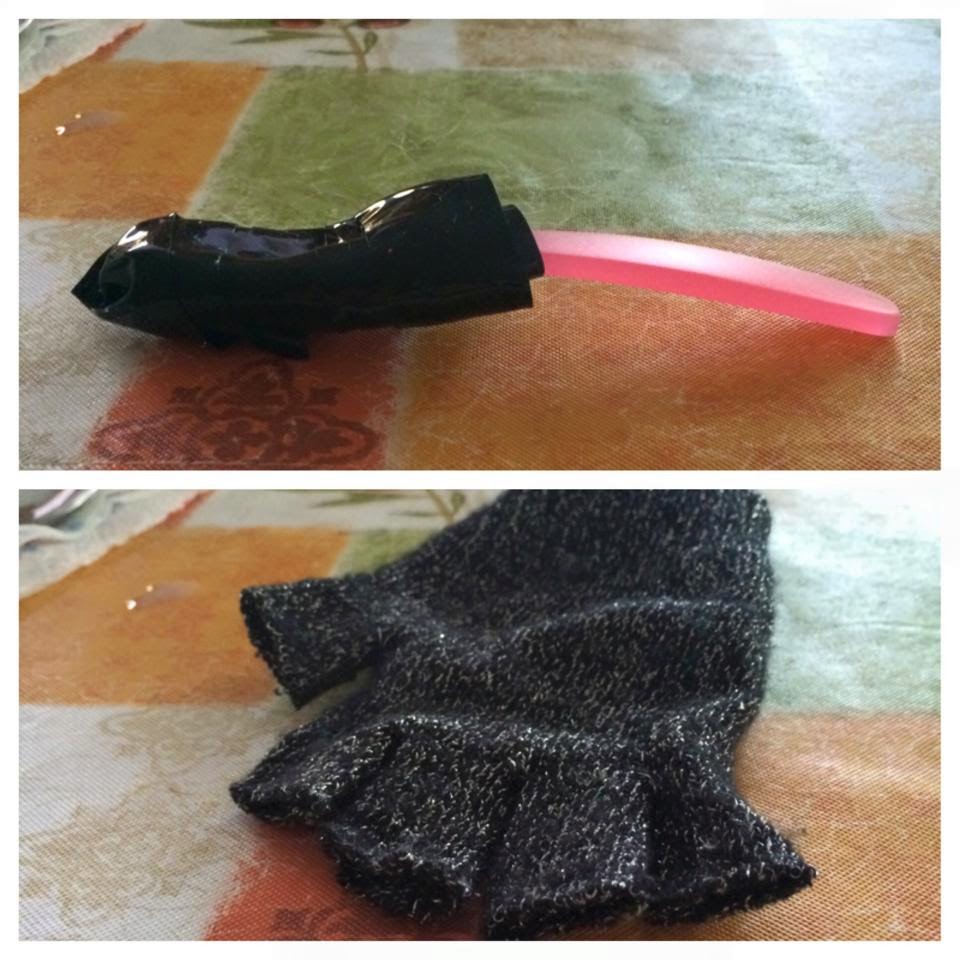
Handmade Tools Part 1 Stylus and Fingerless Glove - Adapting the iPad for Children with Disabilities

Image
Lauren Pasquazzi , EC-SEAT Scholar and Assistant Preschool Teacher The first adaptation I created is a pen for the iPad. This pen is specifically designed for young children because one of the materials that was used was a child's utensil. This helps a child to have a better grip when using it. I also used conductive foam and ez fuse tape.  The second adaptation I created is a glove with the finger cut off. This can help children who may have a difficult time using a touch screen and end up putting all of their hand on the screen. The screen won't detect the glove only the skin which is where the fingers will be. Meg Foehl , EC-SEAT Scholar and Preschool Teacher The first adaptation is used to help a child isolate the use of his or her pointer finger. It is made from a child's cotton winter glove with the tip of the pointer finger cut off. The second adaptation is a low cost simple to make diy stylus. It is made out of an old pen, a q-tip, ...

Benefits of Outside Play for Young Children

Image
By: Meg Foehl,  EC-SEAT Scholar and Graduate Student in Early Childhood Special Education; Early Childhood Teacher at   Live and Learn Early Learning Center . According to Richard Louv, author of Last Child in the Woods, children becoming more and more removed from nature, which is affecting their psychological and physical well being. Children today spend more time in structured activities and on electronic devices and less time engaged in unstructured play in nature.  Louv shares many studies that show that spending time in nature has tremendous health benefits.  Among these benefits are: increased fitness levels, improved concentration, reduced stress, as well as, improved vision. Studies also show that unstructured play in nature can help treat mental illness- particularly ADHD and depression.  Children who spend more time in nature develop increased coordination- especially in balance and agility, inventiveness, improved  intellectual devel...

Tech in the Early Years - New book from Routledge

Image
The Erikson TEC Center just announced the publication of Technology and Digital Media in the Early Years: Tools for Teaching and Learning   edited by Chip Donohue. Check out the following website for more information about the book. It provides a wide range of topics focused on technology and young children, technology in the classroom and technology beyond the classroom. It also has chapters focused on UDL, STEM and home to school connections. Worth a look! http://teccenter.erikson.edu/tech-in-the-early-years/

Tip Sheets for Assistive Technology (AT), Embedded Instruction and Universal Design for Learning (UDL)

We have recently developed four tip sheets for professionals and families working with young children experiencing disability and their peers in early childhood and early intervention. Follow the links below for a PDF version. Assistive Technology Assistive Technology & Young Children Embedded Instruction Universal Design for Learning