Posts

Showing posts with the label adaptions

Hands-on Use of Assistive Technology Learning in the Classroom

Image
By: Kimberly Chouinard, ECSEAT Scholar Over the past few years I have taken a few courses in Assistive Technology though my program here at the University of New Hampshire. I have learned to “use what you have” for support or to make things accessible for learners. This semester I had a great experience with a student in my class that I would like to share. A student in my class who experiences motor delays started to grow.  That’s great!  We love growth!  But, this growth caused seating issues and it takes time to fit, order and receive new equipment. He seemed to be growing out of his supportive chair and tray. His legs had grown and his feet where not well positioned on the foot support any longer. This growth caused his feet to slide off the foot support, kick out and limit accessibility to table activities with peers. I took my concerns to our team. His nurse, Physical Therapist and I were able to identify the problem (i.e., the foot plate was now too short for his g...

A must watch short video - The Helping Hand - A story by Z. Murphy & L. Kranen

Image
Assistive Technology (AT) supports children of all different abilities and ages. Sometimes, we may not realize what AT is or how it can be found and then used effectively by the child and supported by family, community, and school. Below is a video about a boy named Daniel who had an arm designed for him. The  video and focus on a story  is from Daniel's and his sister's perspective. It is a story that shows Daniel's personality, needs, interests and the work of engineering students who designed an arm just for him (and included him in the process). This video emphasizes so many important aspects of designing and building AT for children. Also, A useful list of short videos and resources about assistive technology can be found by visiting the 5-Minute Film Festival: The Power of Assistive Technology This playlist of videos and resources explores how assistive technology can contribute to an inclusive classroom and empower students with special needs. by: Amy Erin Bor...

Pencil Grip Molded from Instamorph

Image
Written by: Lauren Pasquazzi, Early Childhood Educator and EC-SEAT scholar  This summer I took an Assistive Technology class with Dr. Therese Willkomm. I was able to understand how to work with many different materials to help people with disabilities. In the class, we had to do a project where we create an assistive technology for someone with a disability. I worked with my brother for this project. I created a way for my brother to write without becoming frustrated because the pencil was too small for him to grip. I took Instamorph and was able to form it around the pencil so that my brother felt comfortable. From this project, I learned about working with someone and making sure that the assistive technology is the right fit. Instead of just assuming that this is what my brother wanted, we discussed options together and tried different ways to hold the pencil with the Instamorph . At the end, not only did I feel accomplished, but I think my brother did too because he ...

iPad Adaptations - Two Videos

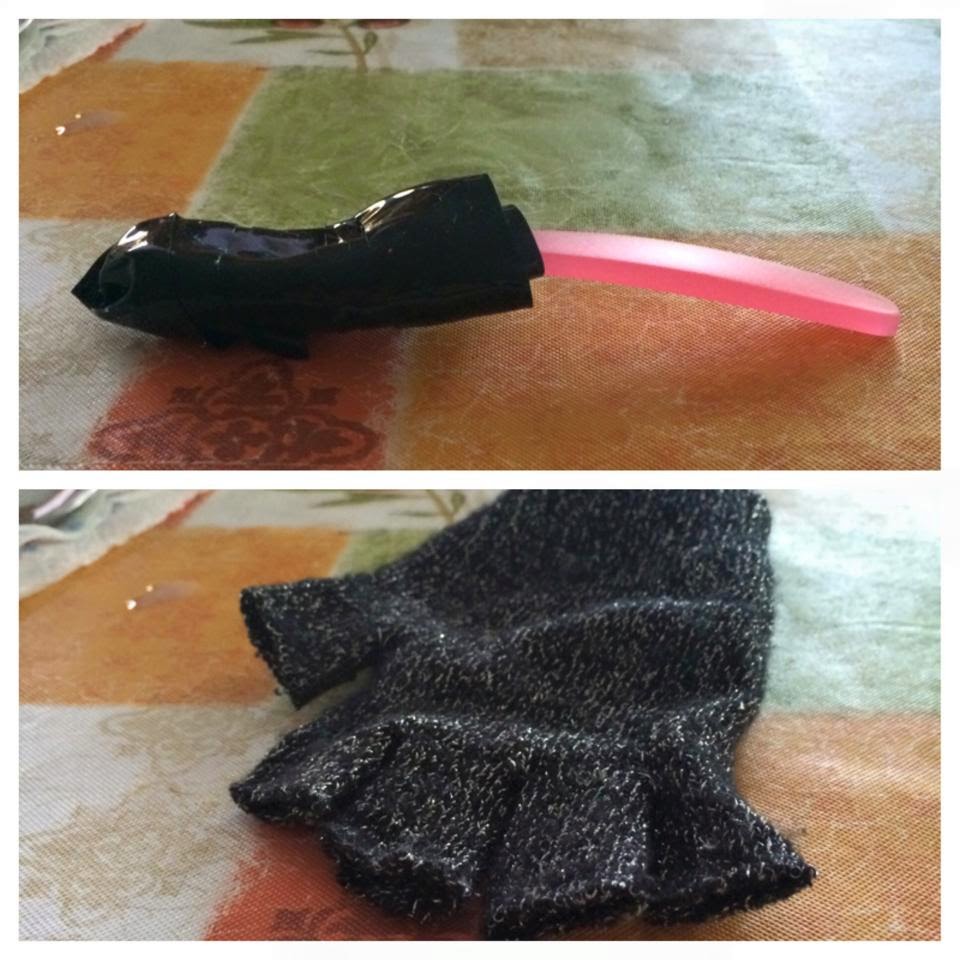
The two videos below illustrate some of the work scholars are doing with Therese Willkomm in her class: Using iPads to Support Children with Disabilities, an online class during J-Term at the University of New Hampshire. This class is open to a diverse group of learners and teaches students to: Build knowledge and skills to maximize children’s learning potential using the iPad Learn how to Integrate and modify the iPad for young children with disability Learn creative uses of built in features on the iPad Select quality apps by features mapping Employ Universal Design for Learning (UDL) Erin s a first year EC-SEAT scholar who also works as a full-time paraprofessional, and these are her videos. The first adaptation is a stylus using a pen, a cotton ball, tin foil, and duct tape. I placed the cotton ball over the tip of the pen and wrapped tin foil around both the pen and the cotton ball. This secured the cotton ball to the pen but to more tightly secure it I duct...

Handmade Tools Part 1 Stylus and Fingerless Glove - Adapting the iPad for Children with Disabilities

Image
Lauren Pasquazzi , EC-SEAT Scholar and Assistant Preschool Teacher The first adaptation I created is a pen for the iPad. This pen is specifically designed for young children because one of the materials that was used was a child's utensil. This helps a child to have a better grip when using it. I also used conductive foam and ez fuse tape.  The second adaptation I created is a glove with the finger cut off. This can help children who may have a difficult time using a touch screen and end up putting all of their hand on the screen. The screen won't detect the glove only the skin which is where the fingers will be. Meg Foehl , EC-SEAT Scholar and Preschool Teacher The first adaptation is used to help a child isolate the use of his or her pointer finger. It is made from a child's cotton winter glove with the tip of the pointer finger cut off. The second adaptation is a low cost simple to make diy stylus. It is made out of an old pen, a q-tip, ...